
carob tree
—
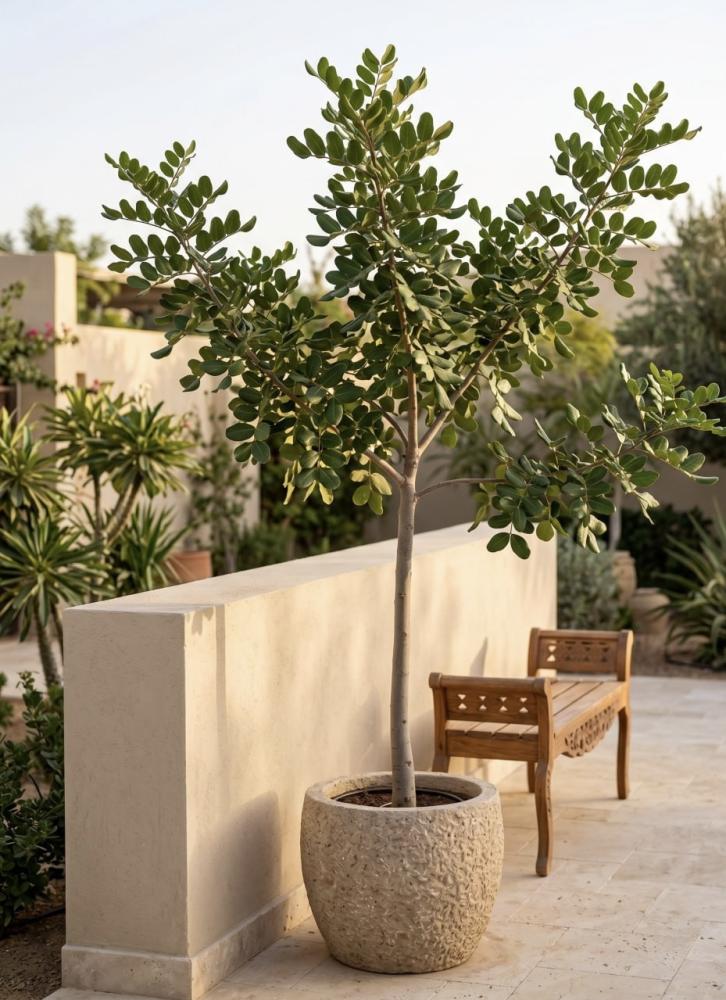
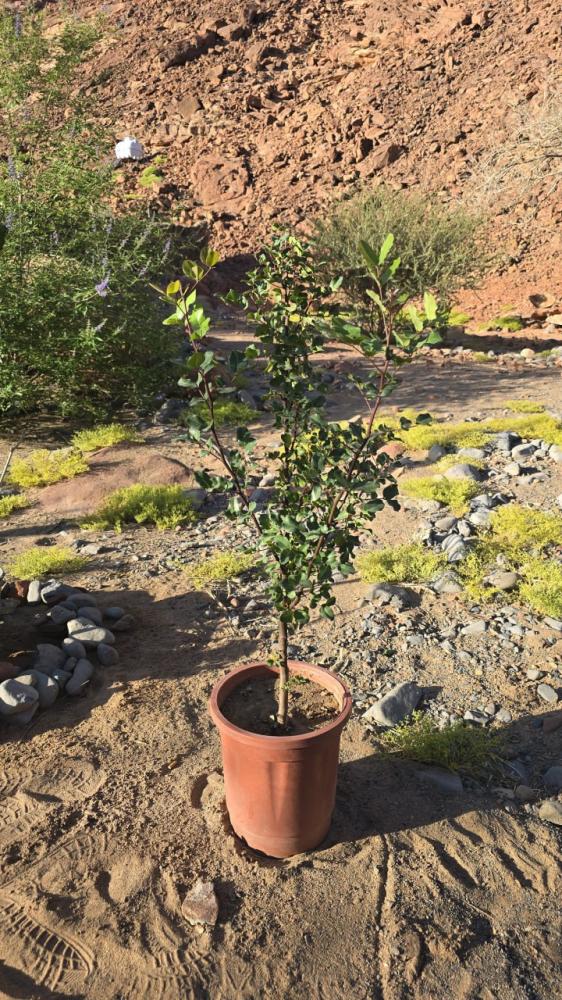
From the Mediterranean coast to the gardens of Saudi homes, the carob tree, with its ancient trunk and glossy leaves, carries with it the memory of thousands of years. A tree blessed by tradition and mentioned in ancient books, it bears sweet, brown pods, providing ample shade and an authentic presence that evokes the land and its bounty.
Scientific name
Ceratonia siliqua
Aesthetic features
An ancient, winding trunk with rough bark gives the tree a heritage character.
Compound pinnate leaves with glossy, leathery-textured oval leaflets.
A dense, round crown gives the place a wide, vivid shade.
Functional features
It provides ample shade in gardens and entrances.
It is highly resistant to drought and tolerant of the harsh Saudi climate.
Carob pods, which have nutritional and cultural value, bear fruit.
Care
Lighting: Full direct sunlight.
Irrigation: Regular in the first years, then gradually reduced after establishment, and only a little is needed after maturity.
Temperature: Tolerates between 5 and 45 degrees Celsius.
Fertilization: Apply a balanced fertilizer once a year in the spring.
Space: It needs ample space for its roots and broad crown to spread.
Size
diverse
Ideal location
Entrances to villas and palaces.
Spacious gardens and outdoor shaded seating areas.
—
Keywords:
Outdoor plants, shade trees, carob, carob tree, siliqua, heritage trees, fruit trees, garden plants, drought-tolerant plants, nattool, carob tree, Ceratonia siliqua, shade trees, fruiting trees, Mediterranean trees